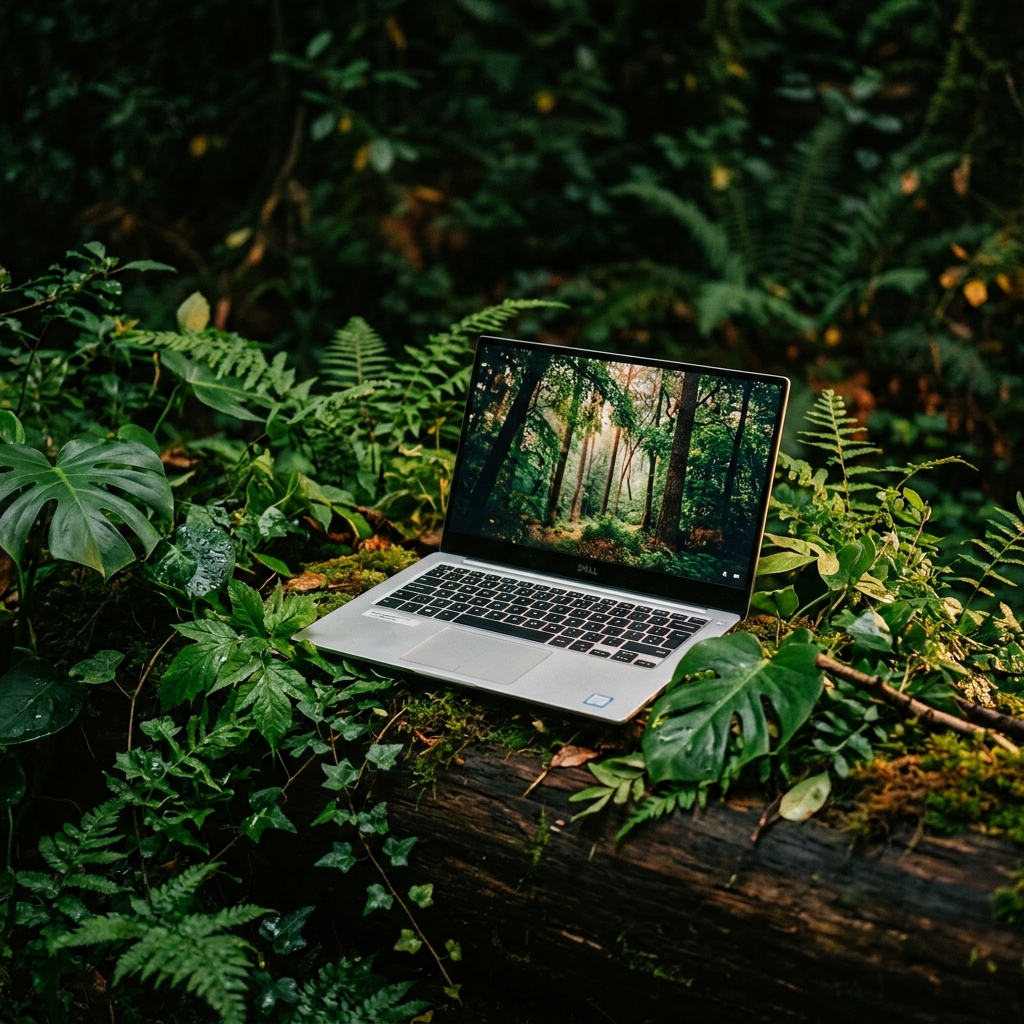
Why Refurbished Tech Makes Sense in 2026
The refurbished tech market has changed. What used to mean "someone else's old computer" now means professionally inspected, warranty-backed devices at a fraction of the new price. In 2026, there are compelling reasons to choose refurbished — environmental, financial and practical. Here's the honest case.
The Environmental Case
Manufacturing a new laptop produces approximately 300-400kg of CO2 equivalent — mining raw materials, processing, assembly across multiple countries, and shipping. Around 80% of a laptop's lifetime carbon footprint comes from manufacturing, not from the electricity used to run it.
Extending a laptop's useful life by three years avoids that entire manufacturing footprint. The refurbishment process — testing, cleaning, data wiping, repackaging — produces a negligible amount of carbon by comparison. It also keeps electronic waste out of landfill, where toxic materials like lead and mercury leach into the soil.
The greenest laptop is the one that already exists.
The Financial Case
Refurbished devices typically cost 30-60% less than their new equivalents. A business-grade laptop that was £1,200 new might be £450-£600 refurbished — and it's the same machine, with the same components, built to the same standards.
That price difference gets more interesting when you consider what you're actually buying. The refurbished market is dominated by business-grade machines — Dell Latitudes, Lenovo ThinkPads, HP EliteBooks. These are devices that were originally specced and purchased by corporations, built to survive three to five years of daily professional use. They have better keyboards, more durable hinges, stronger chassis and more reliable components than consumer laptops at any price point.
This means a refurbished business laptop at £400 is genuinely a better-built machine than a brand-new consumer laptop at £400. The ThinkPad's keyboard will outlast it. The EliteBook's screen hinge won't wobble after six months. The Latitude's port selection won't require a bag full of dongles.
For businesses buying in bulk, the savings multiply. Equipping a team of ten with refurbished laptops instead of new ones can save £3,000-£5,000 — money that goes further spent on software, training or simply keeping the lights on.
The Quality Case
This is the argument that surprises most people: refurbished business-grade is better than new consumer-grade.
A two-year-old Lenovo ThinkPad T14 is a better machine than a brand-new budget laptop from any manufacturer. It has a better processor (business laptops don't ship with bottom-tier chips), more RAM (usually 16GB vs the 8GB typical of budget machines), a faster SSD, a superior keyboard, and a chassis that was designed to survive being opened and closed thousands of times.
Business laptops are also designed to be repaired and upgraded. Many have user-replaceable RAM and storage, accessible battery compartments, and published service manuals. Try upgrading the RAM in a sealed consumer ultrabook — you can't.
The performance difference between a 2024 business laptop and a 2026 budget laptop is negligible for everyday tasks. Web browsing, office work, video calls, streaming — a well-specced refurbished machine handles all of it without breaking a sweat.
The Warranty Case
Buying "used" from a stranger on a marketplace is a gamble — no inspection, no testing, no warranty, no recourse. A legitimate refurbisher does things differently. At NI Computers, every device goes through our 30-point inspection covering hardware diagnostics, component testing, battery health, data sanitisation and quality assurance.
Our 12-month warranty covers hardware defects and failures under normal use. If a component fails, we repair or replace the device. That's more protection than buying second-hand, and comparable to the manufacturer's warranty on a new device.
The Circular Economy
Most refurbished tech starts life in a corporate environment. Large companies lease their IT equipment on three-year cycles. When the lease ends, the devices are returned — regardless of condition. Many of these machines have barely been used, sitting on desks in meeting rooms or assigned to employees who worked primarily on their phones.
Without the refurbishment industry, these devices would be recycled for raw materials (an energy-intensive process) or, worse, discarded. Refurbishment gives them a second life — professionally inspected, warranty-backed and sold to consumers and businesses who get an excellent device at a fair price.
It's a model that works for everyone. The original company gets clean disposal and data sanitisation. The refurbisher creates jobs and builds a business. The buyer gets a quality device at a lower price. And the planet avoids the carbon cost of manufacturing a replacement.
In 2026, choosing refurbished isn't a compromise. It's a straightforward decision backed by the numbers — less waste, lower cost, equal or better quality, and a proper warranty. The only thing you give up is the shrink wrap.
Related Products
- Lenovo ThinkPad T14 Gen 4 — the business-grade benchmark
- Dell Latitude 5540 — built for durability and daily use
- HP EliteBook 840 G9 — premium business ultrabook
- Dell OptiPlex 7010 SFF — refurbished desktop starting from £299